
Laser Hair Removal in Hyderabad: Sessions, Cost & Results
Shaving, waxing, threading, and depilatory creams can feel like a never-ending cycle. Hair grows back, skin may feel irritated, and schedules often revolve around the next salon visit. Laser hair removal offers a longer-lasting way to reduce unwanted hair, but one question comes up again and again: how many sessions will it take?
The honest answer is that the number of sessions varies. It depends on hair type, skin tone, hormonal factors, the treatment area, and how the hair responds over time. At Luxe Aesthetics, Kondapur, Hyderabad, the goal is to assess these factors carefully and suggest a treatment plan that is realistic, safe, and tailored to the individual.
This guide explains how laser hair removal works, what to expect from sessions, how to prepare, and how to care for the skin afterwards.

How laser hair removal works
Laser hair removal uses concentrated light energy to target the pigment, called melanin, in the hair. The hair absorbs this light, which turns into heat. This heat affects the hair follicle and helps reduce future hair growth from that follicle.
The treatment works best when the hair is in its active growth phase. Since not all hairs grow at the same time, one session cannot treat every hair effectively. This is why multiple laser hair removal sessions are needed.
Laser treatment does not usually remove every hair forever. A more accurate term is laser hair reduction treatment, because it can reduce hair growth, thickness, and density over time. Some hairs may grow back finer and lighter. Some areas may need maintenance sessions later.
At Luxe Aesthetics Hyderabad, the laser settings are selected based on the treatment area, hair thickness, skin tone, and comfort level. This assessment matters because safe treatment for facial hair, underarms, legs, or bikini areas may require different energy levels and techniques.
Laser hair removal is best understood as a planned course of treatments, not a one-time procedure.
How many laser hair removal sessions are usually needed?
Most people need a series of sessions to see a visible reduction in hair growth. A common range is 6 to 8 sessions, but some may need fewer and others may need more. The response can vary from area to area on the same person.
For example, underarms may respond differently from the face. Coarse, dark hair often responds well because it absorbs laser energy more easily. Fine hair usually needs more patience and may show slower improvement.
Here is a general guide:
Treatment area | Typical session range | What to expect |
Upper lip and chin | 6 to 10 sessions or more | Facial hair can be influenced by hormones, so maintenance may be needed |
Underarms | 6 to 8 sessions | Often responds well when hair is dark and coarse |
Arms and legs | 6 to 8 sessions | Larger areas may need longer appointment times |
Bikini area | 6 to 8 sessions | Coarse hair can respond well, but sensitivity varies |
Back and chest | 6 to 10 sessions | Density and hormonal patterns can affect results |
These ranges are only general. The answer to how many laser hair removal sessions are needed depends on personal factors. During a consultation at Luxe Aesthetics Kondapur, the practitioner can examine the area and explain what is realistic for the hair and skin type.
Why one session is not enough
Hair grows in cycles. The three major phases are:
Active growth phase
This is when the laser works best because the hair is still connected to the follicle.
Transition phase
The hair begins to detach, so the effect may be less predictable.
Resting phase
The hair is not actively growing, so the laser may not affect it in the same way.
Since only a portion of hair is in the active growth phase during each visit, sessions are spaced out to catch new hairs as they enter the right phase.

What affects your laser hair removal results?
Laser hair removal is personalised because no two people have the same hair growth pattern. Several factors can affect the number of sessions and the level of reduction.
Hair colour and thickness
Dark, coarse hair usually absorbs laser energy better. This can make it more responsive to treatment. Fine, light, grey, white, or red hair may not respond as strongly because it has less pigment for the laser to target.
This does not mean treatment is impossible for everyone with lighter or finer hair, but expectations should be realistic. A consultation helps decide whether laser is suitable or whether another approach may be better.
Skin tone
Skin tone affects laser selection and energy settings. Many modern laser systems can treat a range of skin tones, but the provider must use suitable settings to reduce the risk of irritation, burns, or pigmentation changes.
For laser hair removal in Hyderabad, where many patients have medium to deeper Indian skin tones, careful assessment is especially important. The aim is to target the hair while protecting the surrounding skin.
Treatment area
Different body areas respond differently. Laser hair removal for face may need more sessions because facial hair can be influenced by hormones. Laser hair removal for body areas such as legs, arms, underarms, and bikini line may follow a more predictable pattern, though results still vary.
Hormonal factors
Hormonal changes can increase hair growth, especially on the face, chin, neck, chest, abdomen, and back. Conditions such as PCOS may also affect results. In such cases, laser can still help reduce hair, but maintenance sessions may be needed.
Consistency with appointments
Staying on schedule matters. If appointments are delayed too much, it may take longer to complete the course. Regular sessions allow the laser to target new hairs as they enter the active growth phase.
Your hair removal habits
Waxing, threading, tweezing, or epilating between sessions can reduce the effectiveness of treatment because these methods remove the hair from the root. The laser needs the hair shaft in the follicle to work properly. Shaving is usually preferred between sessions if needed.
How much gap should there be between sessions?
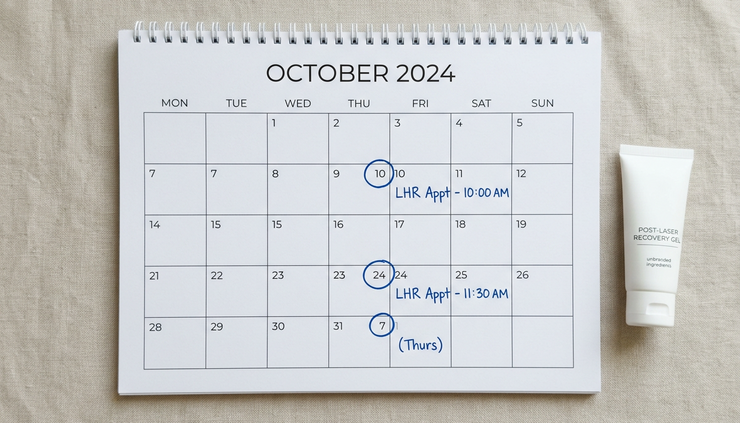
The gap between laser hair removal sessions depends on the treatment area and hair growth cycle. In many cases, sessions are spaced about 4 to 6 weeks apart for the face and around 6 to 8 weeks apart for body areas.
Your provider may adjust this timing based on how quickly hair grows back and how the skin responds.
A typical plan may look like this:
Face
Around every 4 to 6 weeks
Underarms and bikini area
Around every 4 to 6 weeks or 6 to 8 weeks, depending on growth
Arms, legs, back, and chest
Around every 6 to 8 weeks
Spacing sessions too close together may not improve results, because not enough new hairs may have entered the active growth phase. Waiting too long can also slow progress. A planned schedule gives the best chance of steady reduction.
People looking for laser hair removal in Kondapur or laser hair removal treatment in Hyderabad often ask if they can finish the process quickly before an event. While planning ahead can help, it is better to start early rather than rush sessions too close together.
How to prepare before your appointment
Good laser hair removal preparation can make the session safer and more comfortable. The clinic may give specific instructions based on the treatment area and skin type, but these general steps are commonly recommended.
Shave before the session
Shaving is usually advised 12 to 24 hours before treatment, or as instructed by the clinic. It removes surface hair while keeping the root intact, which helps the laser target the follicle.
Do not wax, thread, tweeze, or use an epilator for a few weeks before treatment unless your provider gives different advice.
Avoid tanning and strong sun exposure
Fresh tanning can make the skin more sensitive and may increase the risk of pigmentation changes. Use sun protection, cover the area when possible, and inform the provider if you have had recent sun exposure.
Keep the skin clean
On the day of treatment, avoid applying creams, oils, perfumes, deodorants, or makeup on the treatment area unless the clinic says otherwise. Clean skin allows safer laser contact.
Share your medical history
Tell the practitioner about:
Current medicines
Recent skin treatments
Active infections or rashes
Pregnancy or breastfeeding
History of pigmentation or scarring
Hormonal conditions such as PCOS
This helps the team decide whether treatment should go ahead, be delayed, or be modified.
What to expect during and after treatment
During the session, the practitioner may clean the area and mark sections for even coverage. Protective eyewear is usually used. A cooling system, gel, or cold air may help improve comfort, depending on the device.
The sensation can feel like a quick warm snap on the skin. Some areas, such as the upper lip or bikini line, may feel more sensitive than legs or arms. Most sessions are manageable, and the duration depends on the size of the area.
Small areas such as the upper lip may take only a short time. Larger areas like full legs, back, or arms take longer.
Laser hair removal aftercare
After treatment, the skin may look slightly red or feel warm, similar to mild sunburn. This usually settles within a short period, though every skin type responds differently.
Common aftercare advice includes:
Apply a soothing gel or moisturiser if recommended
Avoid hot showers, steam, sauna, and heavy workouts for 24 to 48 hours
Do not scrub, exfoliate, or use harsh actives immediately after treatment
Use sunscreen on exposed treated areas
Avoid waxing, threading, or tweezing between sessions
Shave if needed, once the skin feels calm
Good laser hair removal aftercare supports skin recovery and helps reduce irritation.
Possible side effects
Laser hair removal is widely performed, but side effects can happen. Most are temporary and mild when treatment is done with suitable settings.
Possible side effects include:
Redness
Warmth or mild swelling around follicles
Temporary itching or sensitivity
Dryness or flaking
Pigmentation changes, especially if the skin is tanned or irritated
Rare burns, blisters, or scarring
Choosing a trained provider and following pre-care and aftercare instructions helps reduce risks. If discomfort, blistering, or unusual marks appear after a session, contact the clinic for advice.
This article is for general information only. A qualified aesthetic practitioner or doctor should assess your skin before recommending treatment.

Benefits of laser hair removal and when to book a consultation
The main reason people choose laser is convenience. Over time, many notice less frequent hair growth, finer regrowth, and fewer ingrown hairs. For people who get razor bumps, waxing irritation, or repeated salon visits, laser can be a practical choice.
Common laser hair removal benefits include:
Longer-lasting hair reduction compared with shaving or waxing
Less need for frequent hair removal
Smoother-looking skin in treated areas
Fewer ingrown hairs for some people
Treatment options for small and large areas
A planned approach that can fit into a long-term grooming routine
Some people refer to it as permanent hair reduction treatment in Hyderabad, but it is better to understand the term clearly. Laser can reduce long-term hair growth, yet maintenance may be needed. Results are not identical for everyone, and no ethical clinic should promise complete permanent removal for every patient.
If you are comparing options for laser hair removal treatment in Kondapur, look for careful skin assessment, clear communication, hygiene, suitable technology, and realistic guidance. The best laser hair removal clinic in Hyderabad for any patient is one that explains both benefits and limits before starting.
At Luxe Aesthetics Hyderabad, the consultation helps answer practical questions such as:
Is laser suitable for my hair and skin type?
How many sessions may I need?
Which laser settings are appropriate for my skin tone?
How should I prepare?
What results can I reasonably expect?
Will I need maintenance sessions later?
Laser Hair Removal in Hyderabad is not a one-size-fits-all treatment. The right plan depends on hair density, colour, skin tone, hormonal factors, and the chosen treatment area. A face treatment plan may look different from a full-body plan, and underarms may respond differently from the legs.
The most realistic approach is to start with a consultation, follow the recommended schedule, care for the skin properly, and review progress after each session.
For those considering laser hair removal in Kondapur, Luxe Aesthetics offers a patient-focused setting in Hyderabad where treatment plans are discussed clearly and customised to individual needs.
Ready to understand what your skin and hair type may need? Book a consultation at Luxe Aesthetics, Kondapur, Hyderabad, and take the next step towards a personalised laser hair removal plan.


Comments